Share
Castile Soap for Aphids: A Natural Fix That Actually Works
If you've walked out to your vegetable garden on a warm morning and found your kale, tomatoes, or rose canes coated in tiny green insects, you already know the particular frustration of an aphid infestation. They multiply fast, they spread disease between plants, and the conventional fixes — synthetic pesticides — come with their own set of problems, especially if you're growing food you plan to eat.
The good news is that liquid castile soap is one of the most effective and least complicated natural remedies for soft-bodied garden pests, and it's almost certainly already in your house.
WHY CASTILE SOAP WORKS ON APHIDS
Aphids are soft-bodied insects. Unlike beetles or wasps, they have no hard shell to protect them. When a diluted castile soap solution contacts an aphid directly, it penetrates the insect's outer membrane and disrupts its ability to breathe, killing it without leaving synthetic residue on your plants or in your soil.
The key words there are "contacts directly." Castile soap is a contact pesticide, not a systemic one. It doesn't get absorbed into the plant and spread through the tissue — it only affects insects it physically touches. This means you need to apply it carefully and thoroughly, but it also means it breaks down quickly and doesn't accumulate in the environment.
It's also worth noting what it doesn't harm: beneficial insects like bees and ladybugs are generally unaffected as long as you're not spraying them directly. Spray in the early morning or evening when pollinators aren't active, and you can treat your aphid problem without disrupting the rest of your garden ecosystem.
(Source: Health Canada Aphids)
THE RECIPE
This is one of the simplest pest control recipes you'll find:
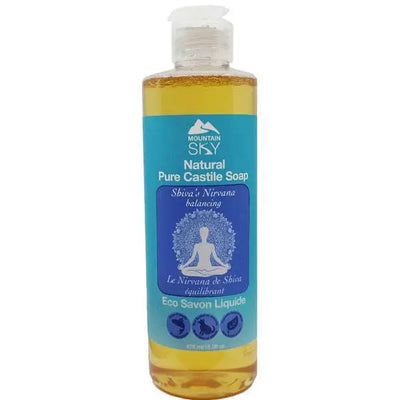
- 1 tablespoon of Mountain Sky Liquid Castile Soap
- 1 liter of water
- Optional: a few drops of peppermint or tea tree essential oil, which can add additional pest-deterrent properties
Mix in a spray bottle. That's it.
Do not increase the soap concentration beyond this ratio. More soap is not more effective it can actually damage plant leaves by stripping the waxy coating that helps them retain moisture. At the correct dilution, the spray is gentle on your plants and effective on the pests.
HOW TO APPLY
Spray directly onto the aphid colonies, which tend to cluster on the undersides of leaves, along new growth, and around stems. Turn leaves over and spray the undersides thoroughly — that's where most of the population will be hiding.
Apply early in the morning or in the evening, not during the heat of the day. Sunlight hitting wet leaves can cause scorching, and the spray will evaporate too quickly in direct sun to be as effective.
Repeat every two to three days for two weeks, or until you stop seeing new aphid activity. One treatment rarely eliminates a full colony — you need to keep at it long enough to break the reproductive cycle.
After treatment, rinse edible plants with plain water before harvesting, even though castile soap is plant-derived and food-safe. It's just good practice.
OTHER GARDEN PESTS CASTILE SOAP WORKS AGAINST
The same diluted spray is effective against a range of soft-bodied garden pests:
- Spider mites: Check the undersides of leaves for fine webbing and tiny moving dots. Treat the same way as aphids.
- Whiteflies: Tiny white insects that fly up in a cloud when you disturb the plant. Spray the undersides of leaves where they lay eggs.
- Mealybugs: White cottony clusters on stems and leaf joints. These are tougher — use a cotton swab dipped in undiluted castile soap for targeted treatment, then follow with a diluted spray.
- Thrips: Slender insects that damage leaves by puncturing them to feed. Spray affected areas and remove heavily damaged leaves.
WHAT IT WON'T WORK FOR
Castile soap is not effective against hard-bodied insects like beetles, caterpillars, or squash bugs. It also won't prevent future infestations once it dries — it only works on contact. For prevention, focus on garden hygiene: remove dead plant material, encourage beneficial insects by planting dill, fennel, or marigolds nearby, and check plants regularly so infestations don't get established before you notice them.
Our unscented liquid castile soap is the best choice for garden use, since some essential oil scents can be slightly more irritating to sensitive plants. The 1L and 4L sizes are practical for anyone doing regular garden treatments.
One last thing: castile soap is biodegradable and breaks down quickly in soil. It won't leave residue, won't harm earthworms at this dilution, and won't affect the beneficial microbial life in healthy garden soil. It's as clean a fix as you'll find for a genuinely irritating garden problem.